
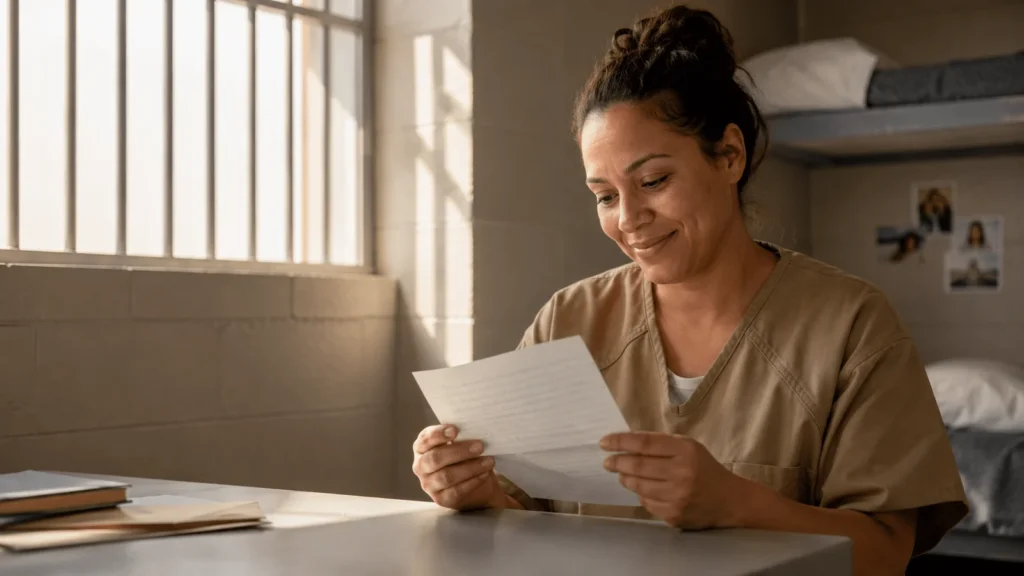
Behind every prison profile is a real person.
A woman with a name, a story, a past, and hopefully, a future. She may be a mother, daughter, sister, friend, or someone who has spent years trying to survive circumstances most people will never fully understand. Being incarcerated does not erase a person’s need for kindness, dignity, hope, or human connection.
For many incarcerated women in the United States, prison can be an incredibly lonely place. The walls do more than separate someone from the outside world. They can also separate a person from family, friendship, community, and the daily reminders that they still matter.
That is one of the reasons letters can mean so much.
A simple letter may not seem like much to someone on the outside. But to a woman in prison, it can be a reminder that she has not been forgotten. It can bring light into a difficult day. It can offer encouragement, friendship, and a connection to the world beyond prison walls.
Women in Prison Are Often Overlooked
When people talk about incarceration in America, women are often left out of the conversation. Yet women and girls are incarcerated across the United States in prisons, jails, and other facilities.
According to the Prison Policy Initiative, about 190,600 women and girls were incarcerated in the United States in 2024. The United States also has one of the highest rates of women’s incarceration in the world. In 2025, the U.S. women’s incarceration rate was estimated at 112 per 100,000 women, higher than almost every country except El Salvador.
These numbers are important, but they do not tell the whole story.
They do not show the mother missing her child’s birthday. They do not show the woman waiting to hear her name called at mail call. They do not show the person trying to hold on to hope while wondering whether anyone on the outside still cares.
Many Incarcerated Women Carry More Than a Sentence
Many women in prison have lived through painful experiences long before incarceration. Some have histories of trauma, poverty, addiction, unstable housing, violence, or broken family relationships. That does not mean every woman’s story is the same. It also does not excuse harm that may have been caused.
But it reminds us of something important: people are more than the worst chapter of their lives.
A woman can be accountable and still be worthy of compassion. She can be incarcerated and still have dreams. She can have made mistakes and still hope to become someone stronger, healthier, and more grounded.
At PrisonFriendship, we believe in second chances. Not because second chances are easy, but because change is often built through support, encouragement, responsibility, and connection.
The Power of a Letter
Letters are personal in a way that few things are anymore.
A letter says, “I took time for you.”
It says, “You are worth more than a number.”
It says, “Someone outside these walls sees you as a human being.”
For women in prison, that kind of connection can matter deeply. Some incarcerated women have very little contact with family or friends. Others may have relationships that have become strained because of distance, pain, shame, or the long years of incarceration.
Receiving mail can give someone something to look forward to. It can create a small routine of hope. It can encourage reflection, honesty, patience, and trust. Over time, a respectful friendship through letters can help a person feel less isolated and more connected to the world they hope to return to.
Research has also shown that family contact and social support during incarceration can have positive effects. Maintaining healthy connections can support emotional well-being, strengthen family ties, and help with reintegration after release.
Not every letter becomes a lifelong friendship. Not every connection will be perfect. But every kind, respectful letter has the potential to make someone feel seen.
Incarcerated Women Are Also Mothers, Daughters, and Sisters
Many women in prison are also mothers. According to the Bureau of Justice Statistics, 58% of women in state or federal prison in 2016 reported having at least one minor child.
That means incarceration does not only affect the woman behind bars. It can affect children, families, caregivers, and entire communities.
For a mother in prison, staying connected can be emotionally complicated. There may be guilt, grief, missed milestones, and the deep pain of being separated from her children. A letter from a friend, family member, or supportive person on the outside cannot fix that pain, but it can help remind her that her life still has meaning and that her future is not finished.
Women in prison need more than judgment. Many need encouragement, honesty, stability, and people who believe that growth is possible.
Friendship Can Help Build a Future
One of the hardest parts of incarceration is not only serving time. It is trying to imagine life afterward.
Reentry can be frightening. A woman coming home from prison may have to rebuild relationships, find housing, look for work, reconnect with family, and learn how to live in a world that has continued without her. That journey is much harder when someone feels completely alone.
Healthy friendships can help a person prepare for life beyond prison. A good friendship can remind someone of their value. It can encourage positive choices. It can offer emotional support while still respecting boundaries and responsibility.
Writing to women in prison is not about saving someone. It is about showing humanity.
It is about saying:
You are still a person.
You are still worthy of kindness.
Your story is not over.
How to Write Respectfully to a Woman in Prison
If you are considering writing to an incarcerated woman, start with kindness and respect. You do not need to have the perfect words. A simple introduction is enough.
You can write about your hobbies, your day, your family, your pets, books, music, faith, encouragement, or simple everyday life. Many people in prison appreciate hearing about normal things because it helps them feel connected to the outside world.
Be honest about your intentions. If you are looking for friendship, say that. If you are open to ongoing correspondence, be clear. If you are only able to write occasionally, be honest about that too.
Good friendships are built on respect, patience, and trust.
It is also important to follow all facility rules and mailing guidelines. Each prison may have different rules about letters, photos, envelopes, email systems, and what can or cannot be sent.
A Small Act of Kindness Can Matter
Writing a letter may feel small. But small acts of kindness can carry more weight than we realize.
For a woman sitting in a prison cell, a letter can bring comfort. It can break through loneliness. It can remind her that someone sees more than her past. It can become part of the hope she carries into tomorrow.
At PrisonFriendship, we believe that people deserve the chance to be seen, heard, and treated with dignity. We believe in human connection. We believe in second chances. And we believe that a simple letter can sometimes be the beginning of something meaningful.
If you have ever thought about writing to women in prison, consider taking that step.
Someone may be waiting for exactly that kind of kindness.