
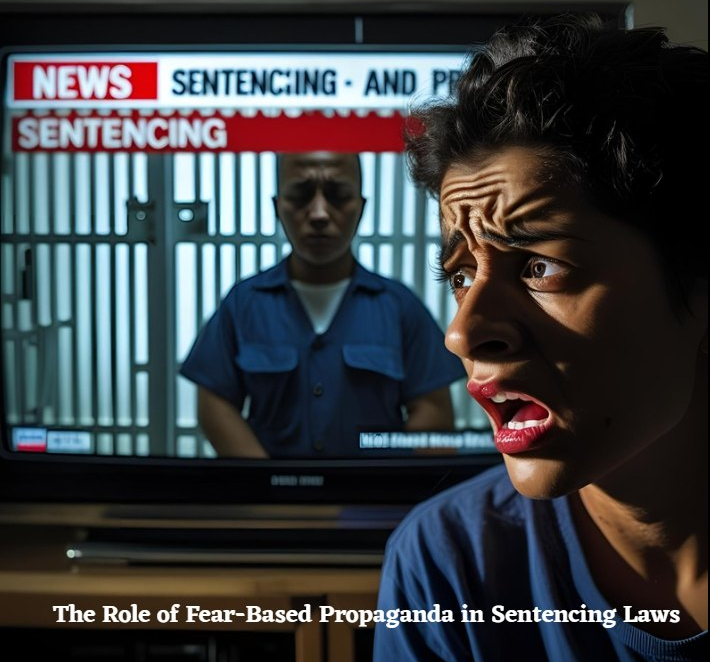
“The Role of Fear-Based Propaganda in Sentencing Laws”
Fear-based propaganda has played a significant role in shaping harsh sentencing laws in the American criminal justice system. Through emotionally charged language and media coverage, propaganda creates a distorted perception of crime, making it seem more prevalent and violent than it actually is. This manufactured fear drives public demand for tough-on-crime policies, pressuring legislators to pass laws that mandate longer prison sentences.
Politicians often capitalize on these fears during election campaigns, promising to crack down on crime by implementing mandatory minimums, three-strikes laws, and other punitive measures. These laws are frequently based on isolated, sensationalized cases rather than broader crime trends, which often show declining or stable rates of violent crime. The result is legislation driven more by public emotion than empirical evidence.
Historically, fear has been used to justify harsh measures, as seen during the “War on Drugs” and the rise of the “super-predator” myth in the 1990s. These narratives disproportionately targeted Black and Latino communities, leading to racial disparities in sentencing. Moreover, the profit-driven nature of private prisons has created financial incentives to maintain high incarceration rates, further encouraging the passage of laws that lengthen sentences.
The media also plays a crucial role, as crime stories—especially violent ones—are heavily reported, reinforcing the belief that crime is out of control. This phenomenon, known as “mean world syndrome,” contributes to public support for harsh penalties and reduced judicial discretion.
In conclusion, fear-based propaganda has distorted public understanding of crime, influenced political agendas, and contributed to mass incarceration in the United States. Addressing this issue requires a shift toward evidence-based policymaking, public education, and a justice system that prioritizes rehabilitation over punishment.